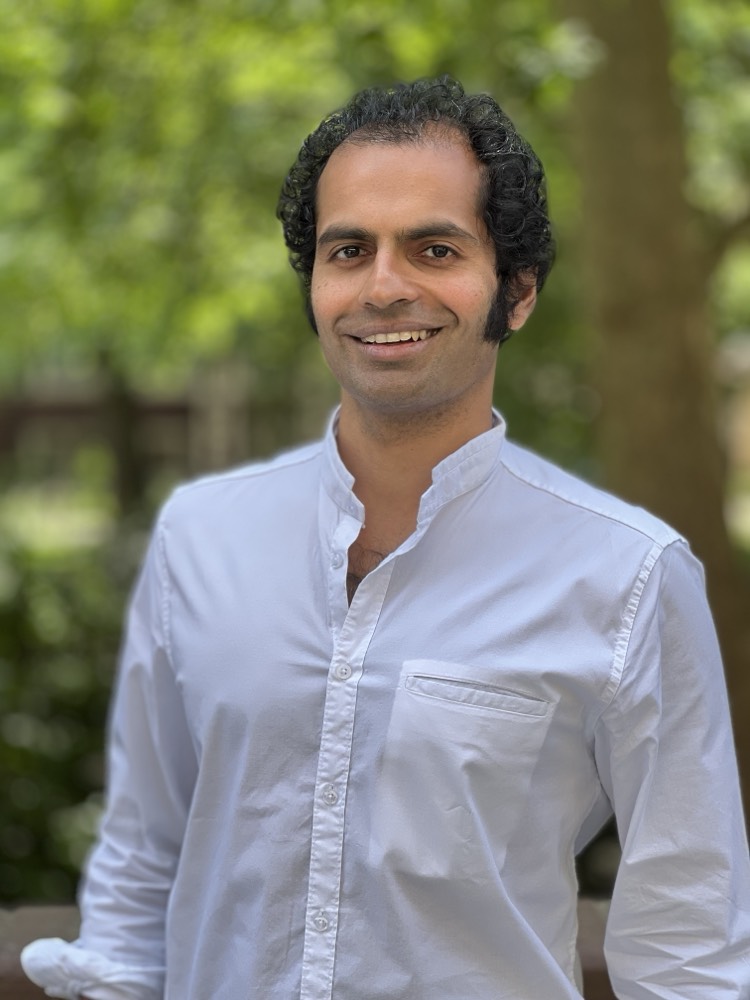
Our International Policy and Programme Manager, Sanj Krishnan, joined the Bar Council in May 2025. He works on projects geared at expanding opportunities for barristers to bring their world-class advocacy skills to disputes around the world and enabling the Bar to speak as an authoritative voice on the rule of law globally. In this blog, Sanj reflects on our participation in London International Disputes Week and meeting India's Chief Justice.
We’ve all heard of the Silk Road—the network of East-West trade routes that featured in Marco Polo’s 13th century travelogue. But even before that, there was the “Golden Road”- the term that historian William Dalrymple gives to India’s sphere of influence as a global force of trade, culture and ideas as early as 3000 years ago.
India’s rise as a major global player today is in many ways a continuation of that story. Is aspirations to become a leading global hub for international arbitration and mediation have roots in the country’s pioneering use of ADR going back millennia.
We wanted to tie these threads together, and who better to do that than the acclaimed author of The Golden Road, The Anarchy, The Last Mughal and co-host of the smash hit podcast Empire?
India and the UK: courts, commerce and culture
On 1 June, as London International Disputes Week (LIDW) kicked off, William Dalrymple joined our Chair of the Bar Kirsty Brimelow KC for a fireside chat on India’s longstanding global role. This event, held jointly by us with the Arbitration Bar of India (under the leadership of Gourab Banerjee SA) in the stunning Guildhall Art Gallery, offered a chance for UK and Indian practitioners to come together, chat and pave ways for collaboration.
What stands out about the “Indosphere” as William puts it, is how influential ancient India managed to be without any recourse to force or conquest. It gained traction in South East Asia through the spread of goods and ideas (notably Buddhism) and was a trading partner of both Ancient Greece and Rome. It’s an inspiring example of how ideas and culture have real currency in a connected world.
Kirsty’s opening remarks pointed to how international arbitration is unique in bringing together lawyers from all over the world to collaborate and drawing on the traditions and ideas of different nations to keep pace with the changing needs of international commerce. Each jurisdiction is enriched by the ability of foreign lawyers to provide services (not least England and Wales where legal advice and representation in arbitration matters are unreserved), and India’s goal of becoming an arbitration hub will be greatly enhanced by enabling the provision of “fly in, fly out” services by barristers and other foreign lawyers in arbitrations, working in complementary capacities to Indian counsel.
A future shaped by collaboration
Among the esteemed international guests attending LIDW was India’s Chief Justice, the Honourable Surya Kant. At the Indian Council of Arbitration’s fourth annual Arbitrating Indo-UK Commercial Disputes conference on 5 June, the Chief Justice said “what is now needed is not comparison [between the UK and India] but co-creation – building something neither could build alone.” That is a principle that underlies our engagement with India’s legal profession. The Chief Justice specifically pointed to the ideas of building a joint UK-India cross-qualified arbitrator pool, and a joint ADR framework for the tech-related disputes that are likely to arise in business under the FTA.
We were honoured to have the Chief Justice speak at an event we hosted at the Indian High Commission on 10 June entitled Technology and the Future of Mediation. The Chief Justice and Chair of the Bar spoke alongside Lord Hamblen of the UK Supreme Court and the Law Society’s Vice President Brett Dixon.
Mediation is a particular passion of Chief Justice Kant’s, and he talked astutely about the role that AI can play – in identifying cases suitable for mediation certainly, and as part of assessing the strengths and weaknesses of each side’s case—but mediation is ultimately a human process. Compared to arbitration, which results in an award that may go on to be litigated, mediation is intended to find a solution that can preserve an ongoing relationship.
Kirsty’s remarks drew on her considerable experience as a mediator, which includes successfully negotiating a public apology from the President of Colombia to a community of farmers whom he maligned as terrorists after they sought justice for a massacre committed by the military. She highlighted the extensive work that barristers do as mediators and as representatives in mediations, in myriad areas ranging from civil and commercial disputes (domestic and international) to employment, family and public law/human rights matters. Barristers’ independence makes them well suited to assessing both sides of an argument; their forensic skill enables them to elicit information from parties that may get to the heart of an issue; and communicating (both their own ideas and the needs and views of others) is the very essence of what they do.
We are excited about our continued collaboration with Indian colleagues. As the Chief Justice put it, the UK and India are two mature common law jurisdictions with high standards of legal training and ethics, and as such, we have everything to gain by working together.
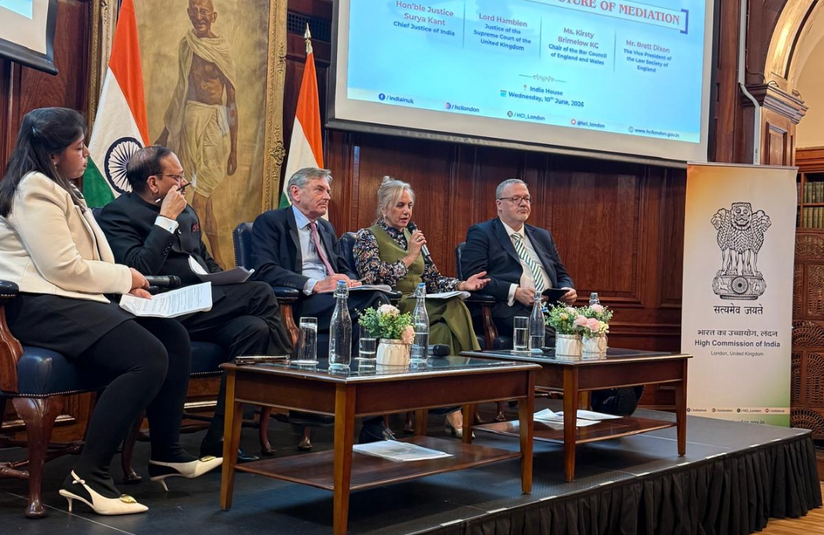
(l-r) Tanvi Dubey (session moderator and Advocate on Record in the Supreme Court of India) , Honourable Justice Surya Kant (Chief Justice of India), Lord Hamblen (Justice of the Supreme Court of the United Kingdom), Kirsty Brimelow KC (Chair of the Bar Council) and Brett Dixon (Vice President of the Law Society of England and Wales)
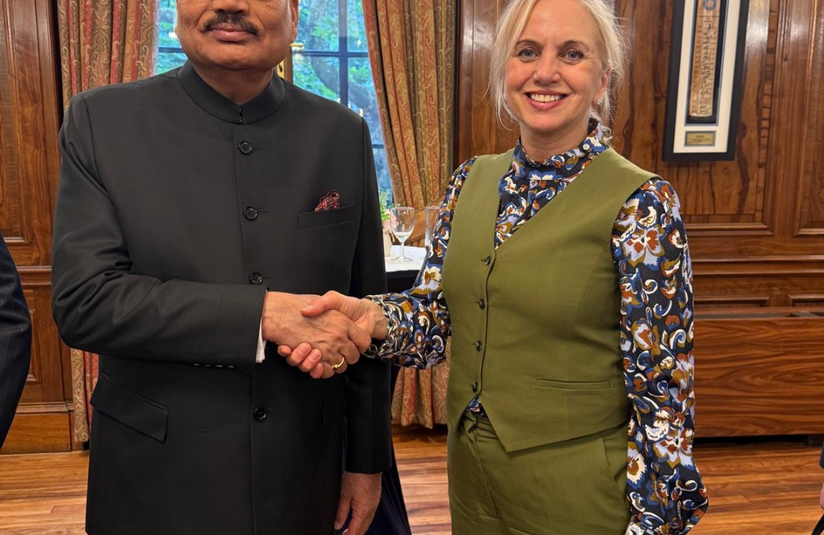
Honourable Justice Surya Kant and Kirsty Brimelow KC
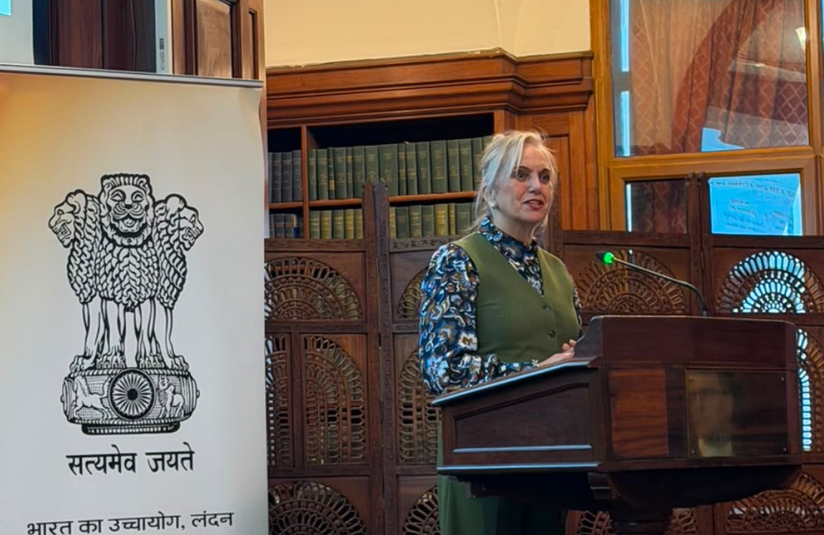
Kirsty Brimelow KC speaking at the 'Technology and the Future of Mediation' event at the Indian High Commission
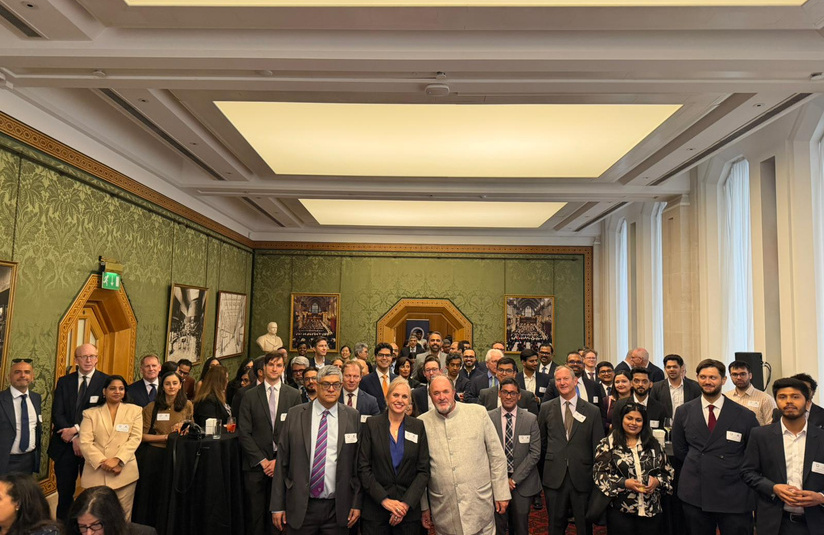
Attendee group photo at a fireside chat event held jointly with the Arbitration Bar of India during London International Disputes Week (LIDW).
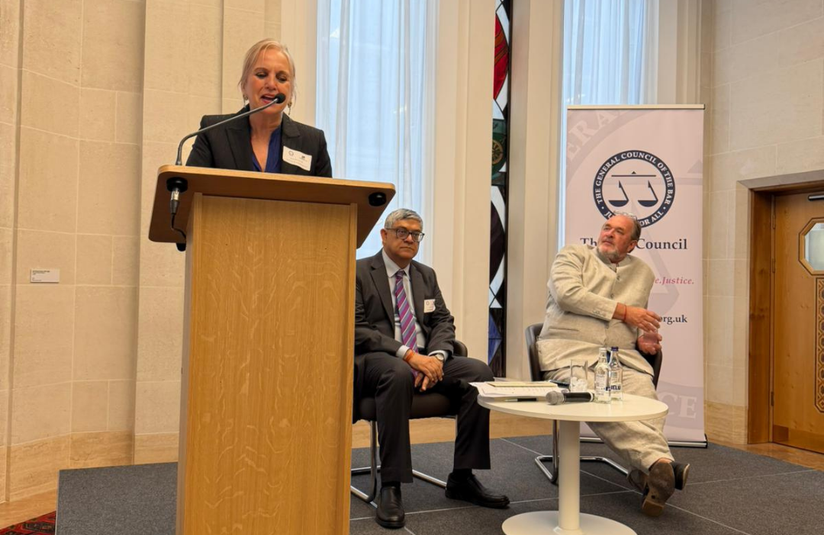
Kirsty Brimelow KC speaking at the fireside chat event with Gourab Banerjee SA (President of the Arbitration Bar of India) and historian William Dalrymple.