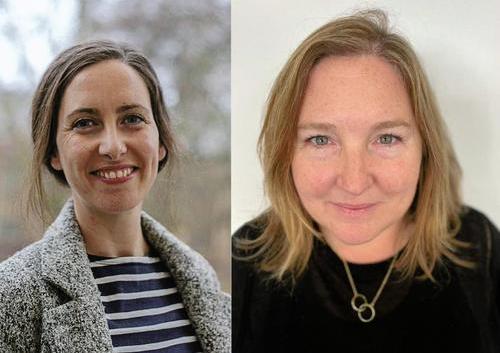
The General Council of the Bar (GCB) has monitored barrister earnings since 2015, with the latest publication ‘Gross earnings by sex and practice area at the self-employed Bar 2025’ being published in November. In this blog, Dr Rose Holmes, Bar Council Head of Research, and Rachel Krys, Bar Council Equality and Diversity Consultant, explain why it’s important to collect and analyse this data and how our work has evolved over the last decade.

This work is supported by funding from the Bar Representation Fee (BRF). Subscribe to the BRF to support our work and to access many money-saving benefits.
Where it all started
When we started asking all barristers about their earnings banding during the annual authorisation to practise (AtP) process, we started to gain important information for both the Bar Council and the Bar Standards Board (BSB) for routine monitoring and for campaigns around issues such as legal aid remuneration.
At the self-employed Bar at that time, there were increasing concerns expressed about women’s experiences at the Bar. The Bar Council’s ‘Snapshot: the experience of self-employed women at the Bar’ (2015) highlighted the difficulties of being a mother at the Bar and discussed challenges they faced in practice, including being pushed into less lucrative work. The BSB’s 2016 report ‘Women at the Bar’ was a response to the Equality Rules coming into force in 2012 and was prompted by women’s retention rates being lower than men’s. It evidenced difficulties relating to maternity, flexible working and culture.
We wanted to know whether there were any patterns in women’s earnings that would indicate whether work at the self-employed Bar paid in the same way for women as for men.
From our data on banded earnings, it was clear to us that women were more likely than men to be in lower earnings bands, and less likely to be in the highest bands. However, we had little information about why that would be. And, as the bands were quite broad, we couldn’t work out median earnings with any degree of accuracy.
Systemic challenges around fair access to work
HHJ Emma Nott’s work in this area in a pioneering series of articles for Counsel magazine was revelatory. Nott hypothesized that there was more to the picture around women’s earnings than culture and maternity and provided robust evidence to show that there were systemic challenges around fair access to the most lucrative and prestigious work, which limited women’s earnings and stymied career development. Others at the Bar started to work at a chambers level to explore discrepancies around pay.
It was clear to us that as the representative body and the organisation which held data on all barristers, there was much we could do in this space.
Our own work in this area was transformed in 2020 when BMIF shared with us much more accurate data on earnings by sex and practice area. We were able, with their permission, to publish simple summary tables, which showed that in all practice areas (apart from family – children) men were receiving more of a share of the total earnings than even their greater numbers would warrant. This pattern began right at the start of a barristers’ career and extended all the way through into silk.
We repeated and expanded this analysis in 2021, where we were able to look at the 20-year trend. Between 2000 and 2020, during a period when the proportion of women at the Bar steadily increased, the gap between men’s and women’s earnings grew.
Understanding the causes of earnings disparities
We knew from other work we were doing with chambers, that the causes of earnings disparities are complex – some related to client briefing practices and allocation of work in the broader legal sector, some related to working patterns, and others related to panel selection, hierarchies and the distribution of particularly better-remunerated work within chambers.
Engagement with chambers, specialist Bar associations (SBAs), and large clients of the Bar including the Crown Prosecution Service (CPS) and Government Legal Department (GLD) has significantly increased our understanding of these dynamics. We were able to draw the conclusion that maternity leave and different working practices could not explain the disparities we were finding.
During the pandemic, many barristers experienced sudden drops in their earnings, and some had acute cash flow crises. It became apparent to us and to the BSB that having data on precise earnings would allow us to maintain better oversight and support. So, we introduced a question at AtP 2021 to ask barristers to self-report their precise earnings for the previous calendar year.
This transformed our ability to report on earnings at the Bar. For the first time we had comprehensive information on all barristers alongside other demographic variables such as KC status, experience and area of practice.
The gap starts at the beginning of barrister careers
Our first reporting using this new dataset in 2023 found that in every Call band and every area of practice, men’s median gross earnings were higher than women’s. The gap started right at the beginning of self-employed barristers’ careers. We wanted to explore the reasons for this, reasoning that if maternity were the explanation for women’s lower earnings, this would not start from day one of a barristers’ career.
We published a report in 2024 using data plus a series of interviews focusing on barristers with under three years’ post qualification experience (PQE). The pattern we had identified persisted – men were earning more than women in each practice area and each level of experience. When we looked only at those barristers without caring responsibilities the gap remained.
Taking action to tackle the gap
Our interviews with chambers indicated that, “Where barristers take up regular practice reviews, and there are policies to ensure the fair allocation of led work, then earnings gaps are reduced.”
Promoting practice review became a key part of our policy work in this area and we developed a practice review guide to support barristers and clerks. We also continued to promote allocation of work and earnings analysis within chambers, as we know from the work the CPS had done that detailed and regular monitoring, alongside taking action when gaps are identified, is essential to closing of the gap.
Meanwhile, we had developed a parallel workstream on publicly funded earnings using a dataset created with the Ministry of Justice (MoJ) that combined our demographic information on barristers with Legal Aid Agency (LAA) and CPS payments data. This information supported our representations to the independent and government reviews of criminal legal aid (CLAIR) and civil legal aid (RoCLA) processes. We found in both studies that women were more reliant on legal aid than men and that, even among those equally reliant on legal aid, women would earn less than men.
How significant are working hours?
The great advantage of the dataset on publicly funded work is that it allows us to partially resolve the tricky issue of working hours. It’s impossible technically to account for the fact that different people have different working patterns without data on either case volume or working hours. We have some indication about working hours from our Barristers’ Working Lives survey:
“Female barristers were more likely than male barristers to work for 40 hours or less per week (30% and 25%) respectively, although they were just as likely as male barristers to work long weeks of more than 60 hours (18% for both males and females), while male barristers were more likely to work 41 to 50 hours per week (34% and 30% respectively).” (Barristers’ Working Lives 2025, unpublished)
It appears from this information that, while women are more likely to work shorter/part-time hours, this is not enough to explain the considerable earnings disparities we see. It’s a similar picture when we have the data to look at case volume. When we’ve had the data to be able to look at this in more detail, we find that work volume only explains a small part (10.5%) of the disparities we see in overall fees.
Our two most recent reports using Bar Council data (2024 and 2025) show that the earnings gap between men and women is widening, with women’s income growing at a slower rate than men’s.
So, where next with this work?
We think it’s important that we continue to carry out routine monitoring, and we’re considering different ways we can present and share this information. We’re working with SBAs to analyse earnings in different practice areas and promote good practice.
We’re doing more analysis on earnings patterns relating to race, and the intersection between race and sex. This can be more challenging as the smaller numbers generated by cutting the data by practice area and experience can mean the data is no longer representative. But we are working on ways to make this analysis meaningful.
We’re also focusing in 2026 on earnings gaps at the publicly funded bar. We plan to publish an analysis using legal aid payments data. We will also continue to work closely with both the CPS and GLD on their monitoring of panel recruitment and briefing practices.
Dr Rose Holmes joined the Bar Council in October 2019 and leads our research, data, and analysis work. She oversees all research projects and outputs including surveys (most significantly the Barristers’ Working Lives survey), consultancy, reports, and data analysis.
Rachel Krys has been a consultant to the Bar Council Equality, Diversity and Inclusion team since 2019 supporting projects to improve the retention and progression of women and under-represented groups at the Bar. Rachel delivers equality, fair recruitment, mentoring and harassment training for the Bar Council and bespoke consultancy for chambers.