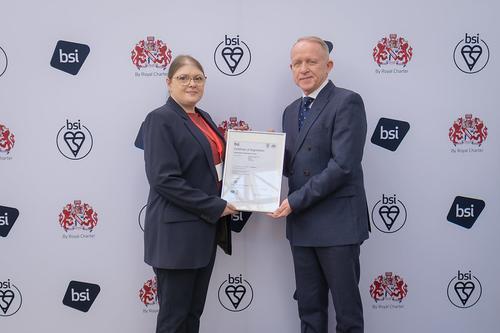
The Bar Council has been awarded the ISO 14001 Environmental Management certification by the British Standards Institution (BSI) for our commitment to environmental sustainability in its operations.
Head of facilities Andy Curtis talked through the process of how the team achieved the accreditation.
What motivated you and your team to purse this environmental accreditation?
Our motivation for pursuing ISO14001 was a mix of things. We wanted to get better at managing our environmental impact and find ways to reduce it wherever possible. At the same time, we knew it would bring real benefits to the organisation, including enhancing our reputation, increased trust from the profession, and cost savings from reduced energy use and waste. Another motivation was our commitment to broader corporate social responsibilities and playing our part to protect the environment for future generations.
For those who aren’t familiar with ISO 14001, what does it require and why is it such a significant milestone for the Bar Council?
ISO 14001 is the internationally recognised standard that helps organisations set up an effective environmental management system, providing a framework to manage environmental responsibilities in an organised and consistent way.
For us, getting this certification is a huge achievement, it shows we are committed to sustainability and demonstrates the power of a structured, collaborative approach. Beyond internal benefits, this success sets an example for environmental leadership within the barrister profession.
Were there any surprises or challenges as part of the initial environmental impact assessment?
I think there were 3 main hurdles we faced when we embarked on this journey, the first being that our existing environmental practices lacked a formalised or consistent system.
The other challenge we faced was trying to track and report environmental performance data, it certainly felt like detective work at the start.
The final hurdle, one I think is common across organisations, is that, while staff were well-versed in data security and health and safety, environmental responsibilities were not widely understood or prioritised.
What were the most challenging aspects of aligning the organisation’s practices with ISO 14001 standards?
The biggest challenge initially was to ensure that the ISO14001 didn’t just tick a box but followed our core values and aligned with that of the wider profession. Building a robust environmental policy that reflected both took time and dedication from our teams.
How are you looking to maintain momentum on environmental improvements?
We are already looking at ISO 50001 which is an international standard that provides a robust framework for an Energy Management System (EnMS). It gives organisations a clear framework for improving energy performance, further costs savings, and reducing their environmental impact.
For us, it is about keeping the mindset of continual improvement and not treating ISO 14001 as a ‘one and done’ project.
What advice would you give to other organisations?
Start by getting strong leadership commitment, bring people in from across the organisation into the conversation early, and tailor the environmental management system to their specific needs.
Keep the momentum going with regular audits, staff engagement and training. And, finally the small things add up: reducing waste, tightening up processes, and increasing awareness all lead to cost savings and a lower environmental impact.
What are you most proud of from this entire experience?
For me I am proud of the a few things: first and foremost is the organisation’s boldness in undertaking such a robust environmental commitment. We could have just had a policy and process that met our needs, but instead we committed to reaching an accreditation that is a globally recognised lead standard in environmental management and compliance.
Secondly is the commitment from my facilities team, and facilities manager, Chiara Begg, to take on a piece of work that would push and test our skillsets but would ultimately ensure that our organisation was seen as a leader in the profession.
Andy Curtis has been Head of Facilities at the General Council of the Bar for more than 8 years. His team is responsible for facilities and in-house operational services, including health and safety and supply chain services.